
Post-Accident Repairs: What Fleets Must Document to Avoid Insurance Issues
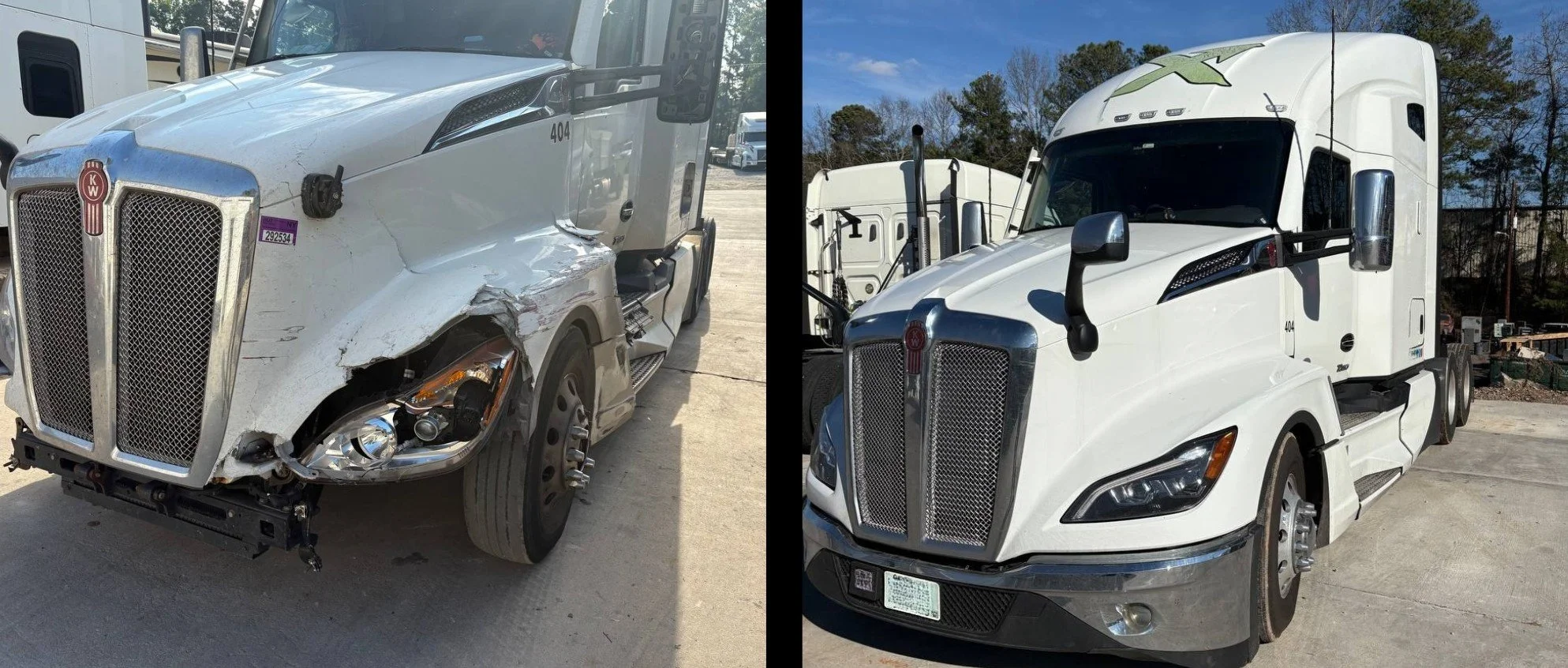
Repaired truck after the accident
A truck accident does not end when the vehicle is towed off the road.
For fleets, the real risk often begins after the accident - during repairs, documentation, and insurance review.
Incomplete or poorly documented post-accident repairs are one of the most common reasons insurance claims are delayed, reduced, or denied. In severe cases, missing records can trigger compliance audits, liability disputes, or future coverage issues.
Below is a practical breakdown of what fleets must document during post-accident repairs to protect insurance coverage, reduce legal exposure, and keep trucks compliant and road-ready.
Why Post-Accident Documentation Matters
Insurance carriers do not simply pay for repairs - they audit the process.
They want proof that:
Damage was accurately assessed
Repairs were necessary and properly executed
Safety-critical systems were restored to OEM or approved standards
The vehicle was safe to return to service
Without documentation, insurers assume risk, and risk equals delays, disputes, or denials.
According to FMCSA post-accident requirements, fleets are also responsible for ensuring vehicles involved in accidents meet all safety and maintenance standards before returning to operation
Read more about post-accident requirements here
1. Accident Damage Assessment Report
Before repairs begin, fleets must document all visible and hidden damage.
This includes:
Exterior damage (body panels, bumpers, fairings)
Structural components
Suspension and steering
Axles and frame alignment
Brake and air systems
Lighting, sensors, and safety equipment
A professional damage assessment protects fleets from:
Insurance disputes over “unrelated damage”
Underestimated repair scopes
Liability claims tied to overlooked components
The Commercial Vehicle Safety Alliance emphasizes the importance of documenting safety-critical systems after crashes read more here
2. Pre-Repair Photos and Video Evidence
Visual documentation is non-negotiable.
Fleets should collect:
High-resolution photos from all angles
Close-ups of damaged components
Undercarriage and suspension images
Video walkarounds when possible
This evidence:
Supports insurance adjuster reviews
Prevents disputes over repair necessity
Creates a defensible repair record
Photos should be time-stamped and stored with the repair file.
3. Detailed Repair Estimates and Authorizations
Insurance carriers require itemized repair estimates, not vague summaries.
Estimates should include:
Labor hours per task
Parts (OEM, aftermarket, or remanufactured)
Sublet services (alignment, frame work, paint)
Diagnostic and calibration procedures
Every approved repair must be authorized in writing before work begins. Unauthorized repairs are one of the fastest ways to lose reimbursement.
Read more about the American Transportation Research Institute highlights repair cost transparency as a key factor in insurance claim resolution here
4. Repair Process Documentation
During repairs, fleets should document:
What was repaired
How it was repaired
Who performed the work
What standards were followed
This includes:
Work orders
Technician notes
Torque specs and procedures
Frame measurements and alignment reports
Calibration confirmations for ADAS systems
If a future incident occurs, this documentation proves the vehicle was restored correctly - not just “patched up.”
5. Parts Documentation and Traceability
Insurance companies increasingly scrutinize parts usage.
Fleets must document:
Part numbers
OEM vs aftermarket classification
Manufacturer and warranty details
Installation dates
Poor parts documentation can lead to:
Claim reductions
Warranty disputes
Liability exposure if a part fails later
6. Post-Repair Inspection and Road-Readiness Verification
Before returning a truck to service, fleets must document:
Final safety inspections
Brake and steering verification
Alignment confirmation
Road tests (when applicable)
A signed post-repair inspection proves the vehicle was verified safe, not just repaired.
This step protects fleets from:
Repeat claims
Negligence allegations
Compliance violations during roadside inspections
7. Record Retention and Storage
All post-accident repair documentation should be:
Digitally stored
Easily retrievable
Linked to the specific vehicle and accident
FMCSA recommends maintaining accident and repair records for compliance and audit readiness
https://www.fmcsa.dot.gov/safety/data-and-statistics
Poor record storage often causes more insurance issues than poor repairs.
Common Documentation Mistakes Fleets Make
Relying only on invoices without photos
Skipping structural or alignment documentation
Performing repairs before insurance authorization
Missing technician notes and procedures
Failing to document safety system calibrations
Each mistake increases claim friction - and future risk.
How Sounders Truck Repair Supports Fleets After Accidents
At Sounders Truck Repair, post-accident repairs are handled with insurance, compliance, and fleet protection in mind.
Our process includes:
Comprehensive damage assessments
Full photo and video documentation
Itemized repair estimates
OEM-aligned repair procedures
Detailed repair records for insurance and audits
We don’t just fix trucks - we help fleets defend their repairs. Click here to schedule your appointment today.
Final Thought
Post-accident repairs are not just mechanical events - they are documentation events.
Fleets that document correctly:
Get paid faster
Reduce legal exposure
Protect CSA scores
Keep insurance relationships healthy
Cutting corners after an accident always costs more later.